
The Call for Papers for the upcoming Researcher to Reader Conference is CLOSED. The Call for the 2027 Conference is likely to be open during July and August 2026.
Proposals for Lightning Talks for the upcoming Conference can be sent in by email until the end of December.

The Researcher to Reader Conference takes place each February, and our Programme is developed between June and October the previous year, with a Call for Proposals normally open during July and August. The Programme comprises a combination of invited contributors and a selection from the proposals received. We also welcome informal suggestions for topics and speakers at any time.
The Advisory Board invites proposals for Keynotes, Presentations, Panels, Discussions, Interviews, Debates, Workshops and Lightning Talks on the subject of international scholarly communications.
We particularly encourage proposals from researchers, editors, funders and librarians, and from people based outside the UK. We are also strong supporters of diversity and inclusion, and actively welcome proposals from under-represented demographics.
We only accept proposals from people, and do not accept proposals from organisations (except for sponsored Lightning Talks). This means that the person making a proposal must be an individual who intends to be involved in the session, not a consultant or a marketing person who is making the proposal on behalf of someone else, or to promote a product or service.
We are offer a choice of TWO deadlines for the Call for Papers: 31 July and 31 August. If you get your proposal to us by 31 July, we will review it and make suggestions for improvements. This will give you time to revise the proposal, which will greatly increase the chance that it will be understood and appreciated by the review committee. (The form says that the early deadline is 30 July, but it is really 31 July.)
Proposers must use our proposal form, and return it to us by email (the email address is in the instructions within the form) although we also welcome informal discussions around potential topics and contributors.
The form is an Excel spreadsheet; while we have attempted to ensure that this contains no viruses, please ensure that the protection on your systems are up to date.
Click the button below to start a proposal:
Key information
The key information for making proposals is set out below:
- The proposals that you make are a key contribution to our programme
- Complete a proposal by 31 July (with review) or 31 August
- Propose a topic likely to appeal to the majority of our participants
- Choose a session format (Panel, Workshop, etc) that suits your topic
- High quality and pre-reviewed proposals have a higher acceptance rate
- Make your own proposal; corporate proposals will be rejected
- Sales messages are not permitted, except in Lightning Talks
- Plan to join the whole Conference, not just ‘fly in’ to address an audience
- Contributors (except Lightning Talks) are offered discounted registration
- Join us at the venue if possible, but you can be online if necessary
- Proposals are evaluated by the Advisory Board, and their decision is final
To make a proposal for participation in the Conference, please first read the detailed guidance below and explore the R2R website for more information, then click the link above (when provided) to start your proposal.
Call For Proposals

Conference Background
The Researcher to Reader Conference is a key forum for discussion of international scholarly communications – exploring how academic knowledge is conveyed from the researcher to the reader. The Conference takes place annually each February and involves around 150-250 participants from all parts of the scholarly communications community, including funders, researchers, research managers, editors, publishers, distributors, technologists and librarians. Initially a physical meeting based in London, the Conference was online-only in 2021 and hybrid in 2022 and 2023. In 2024 we returned to being a physical event, but we do offer some opportunities for a few contributors to join online, where necessary. The Conference has always been designed as a collaborative meeting, and conversation, amongst all the participants (including speakers), and has been successful in maintaining this ethos throughout the online and hybrid experiments.
The R2R Conference has an outstanding reputation for a well-prepared and highly-engaging programme. This is achieved, in part, by having a very structured approach to the Call for Papers, encouraging people to make proposals which are well-suited to R2R, are well-developed, easy to evaluate, and stand a high chance of inclusion in the programme. This, we believe, is helpful to both those making proposals and those evaluating them. The proposal form may look a little daunting, but is designed to be comprehensive yet easy to complete.
Call for Papers Detailed Information
The information below provides additional guidance to help potential contributors to put forward a proposal that is likely to be accepted by the Advisory Board. We recommend that proposers study this guidance carefully, as it should be helpful in ensuring that a proposal is efficiently and effectively prepared, and has a high chance of inclusion.
The proposal process is carefully designed
The guidance and the proposal entry form is deliberately quite structured and comprehensive, as we believe that this structured approach is helpful to both those making proposals and those evaluating them, as it ensures that proposers have the best chance of making clear what they are proposing, which increases their chance of the proposers’ efforts being worthwhile and the proposal being accepted.
To make a proposal for participation, please first explore the Conference website, and review recordings of past sessions at our YouTube channel. Then the potential contributor should complete and return the proposal form (link at top of page) by the early or the final deadline. Early submission by 31 July is encouraged, as it gives us time to contact you to discuss your proposal before it is formally evaluated, greatly increasing your chances of acceptance.
We are also happy, however, for proposers to get in touch with us to informally discuss preliminary ideas or outline proposals prior to final submission.
Topics need to be relevant to our participants
The Conference covers the full life-cycle of scholarly communications, from the researcher who creates content to the reader who consumes content.
We particularly value topics that are of broad interest across the diverse range of people and organisations that participate in scholarly communication, rather than subjects that focus on one particular silo. Our delegates are primarily interested in the interactions between the various parts of the scholarly communications ecosystem, and how different people and organisations can work together more effectively.
The Conference also values topics that are practical, informative or supported by evidence – we are interested in facilitating what could be done, rather than merely debating what should be done.
In some years the Advisory Board may publish a list of topics or themes that may be of particular interest, but proposals related to any relevant subjects are welcomed. Some of the topics that might be of particular interest in an upcoming Conference include:
- Preprints and peer review, and their impact on trust
- Funding sources, methods and mandates
- Public communication of science, news and policy
- The impact of various ‘business models’ on researchers
- Researcher values, incentives, behaviours, integrity and trust
- The impact of diversity, equity and inclusion initiatives
- Improving understanding between researchers and publishers
- Clarity around ‘open’ – access, science, research, data, metrics
Proposals need to fit our session formats
We believe that different topics are best approached using different session formats. For example, sometimes facts need to be presented, other times problems need to be discussed. Currently, we have eight session formats, within three main session types, summarised below and with links to more detailed information:
- Plenaries (Keynotes, Presentations, Panels, Discussions, Interviews & Debates)
- Workshops (typically we offer delegates a choice from about 5 different topics)
- Lightning Talks (optional very brief presentations, which can be commercial)
Anyone can be a contributor to the programme
Proposals can be made, and sessions can be given, by any individual member, or members, of the research, publishing and library community, whatever their institutional or organisational affiliation. Contributors who are employed by commercial organisations are encouraged to participate, but corporate proposals prepared by marketing or PR departments on behalf of their corporate colleagues will not be accepted.
Proposers are encouraged to provide evidence of their experience or suitability, based on past successes and evidenced where possible by video-recordings, although this is not essential.
Sales messages are not permitted except in the Lightning Talks
Generally, proposed sessions must be of interest to the community as a whole, and faithful to the Conference ethos, not merely promotional messages. Selling or demonstrating products or services as part of the programme, whether from a commercial supplier or a not-for-profit organisation, is absolutely unacceptable, except in a Lightning Talk (where the promotional nature of the session must be made clear in the published abstract).
Contributors are participants in the whole Conference
We strongly encourage each contributor to plan to participate in the whole Conference, not just their own session. The R2R Conference ethos is of a community participating together in a two-day collaborative conversation, not a roster of separate speakers presenting to a passive audience in a series of independent sessions. The majority of contributors are expected, therefore, to participate in all (or most) of the meeting as members of the R2R community. Many plenary contributors find joining our collaborative workshops extremely energising. We do recognise that this is not always possible or appropriate, but we urge all contributors to join in fully if they can.
Contributors to the programme are offered discounted registration
All contributors to the programme must be registered Conference participants. Plenary speakers, panellists and moderators are offered a 50% discount on our early-bird tariffs, as they are likely to be benefitting from attending the whole 2-day event. Free registration can be offered for speakers who are unable to attend the whole conference, or those for whom a discounted rate is unaffordable or intolerable. Workshop facilitators (up to two per workshop) have free registration for the Conference. Lightning Talk speakers must be registered at the appropriate normal rate. Various other discounts and concessions are also available. Any other costs for attendance are the responsibility of the participant, although we are very occasionally able to offer some support toward travel or accommodation, often with support from a sponsor.
A contributor should participate physically at the venue, but could be online
Proposers who are invited to contribute to the Conference are encouraged to deliver their session at the physical venue wherever possible. It is, however, possible for a presenter or one member of a panel to be online if necessary.
Proposals are evaluated by the Advisory Board
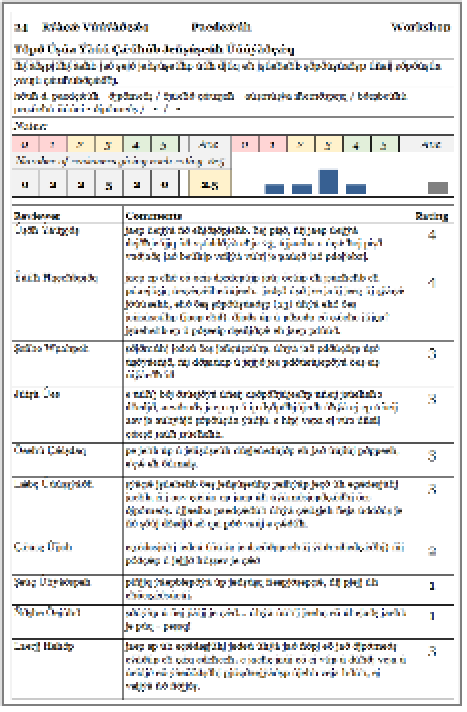
Normally, evaluation of the proposals takes place throughout September, and a response is given by early October, but the evaluation period can sometimes extend well into October, or beyond.
The Advisory Board has complete discretion regarding which proposals are accepted for the Conference programme and the Board’s decision is final. The Conference accepts no responsibility for any costs incurred in the preparation of proposals, or for any consequences of acceptance or rejection.
Proposers may be invited to modify their proposals to meet the needs of the Conference programme. Proposers may withdraw their proposals up to the point of acceptance, or when invited to make modifications.
Proposers agree that, if accepted, their proposal may form part of the Conference programme and that any presentation and biographical content may be included in Conference materials, including potential distribution of slides, scripts, transcripts or abstracts, and any video, audio or photographic recording.
This page updated 23 June and 2 July 2025
 Researcher to Reader Conference — London — 24-25 February 2026
You must be logged in to post a comment.